Mitsubishi Electric Error Codes: A Glendale Reference
Bottom line first: A Mitsubishi Electric error code in Glendale, CA (ZIPs 91201 to 91208) is the system naming its own fault - P-codes are indoor trips, E-codes are communication faults, and U-codes are outdoor or inverter trips - so read the code, match it below, then call (213) 755-3565 or book online and we confirm the root cause before any quote.
Good to know
- P-codes: indoor protection (freeze, drain, thermistor). E-codes: indoor-outdoor communication or address. U-codes: outdoor and inverter protection.
- The code is read at the wired controller, the indoor head's blink pattern, or the kumo cloud app.
- A code that returns after a power-cycle is reporting a real fault - do not just keep resetting.
- Two assigned this site: U4 (outdoor thermistor) and U2 (high discharge temperature).
- Service area: Glendale plus Adams Hill, Rossmoyne, Verdugo Woodlands, Glenoaks Canyon (91201-91208).
- Repair lanes below are 2026 SoCal ranges and APPROXIMATE until we measure.
- Independent shop; in-warranty units referred to authorized service first.
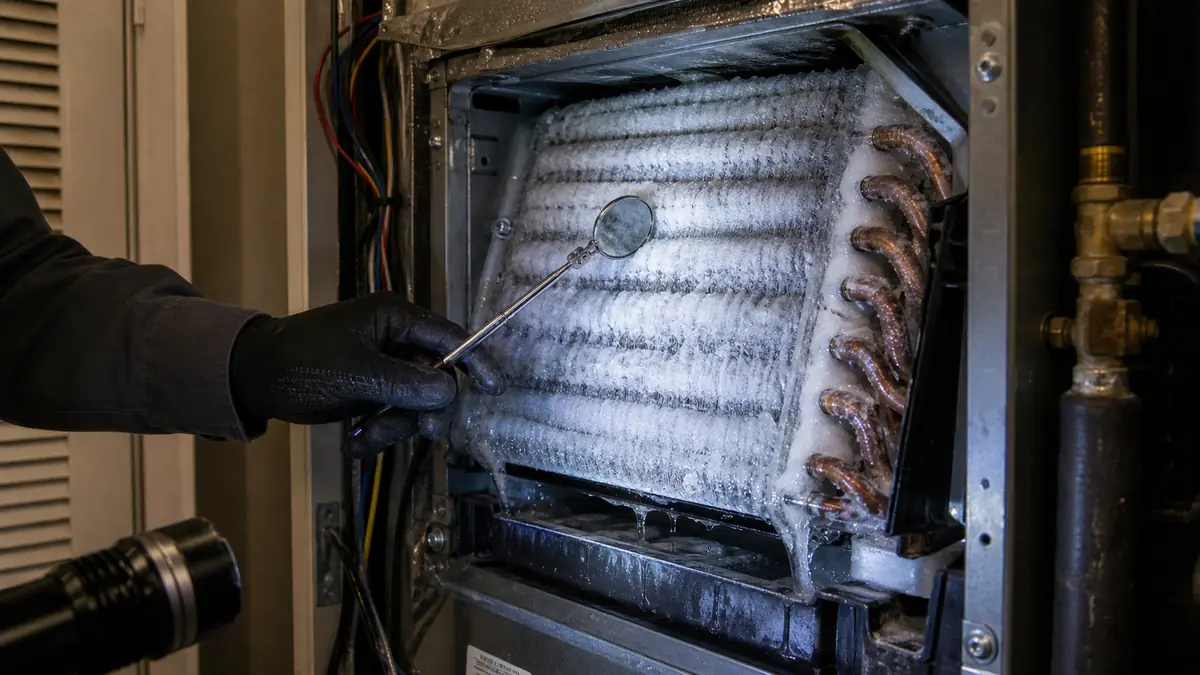
What are the common Mitsubishi error codes and what do they mean?
Mitsubishi Electric groups its faults by where the protection lives. The table below lists the codes we see most on Glendale mini-splits and multi-zone systems, what each one means, and the first thing a tech checks. It is a reference, not a repair order - several of these codes share root causes, so the readings on site decide the fix. The two codes assigned deep pages on this site, U4 and U2, both live on the outdoor unit and get full diagnostic walkthroughs.
| Code | Meaning | First check | Cost lane |
|---|---|---|---|
| P6 | Indoor coil freeze / overheat protection | Filter and indoor coil airflow | $200-$600 |
| P8 | Abnormal indoor/outdoor pipe temperature | Refrigerant charge, flare joints | $225-$1,500 |
| P5 | Drain pump / drain float trip | Condensate pan, pump, drain line | $150-$650 |
| E6 / E7 | Indoor-outdoor communication fault | Signal wiring, board, polarity | $200-$900 |
| U4 | Outdoor thermistor open or shorted | Thermistor resistance, harness | $200-$2,000 |
| U2 | High discharge temperature (outdoor) | Charge, outdoor coil airflow | $225-$3,500 |
How do you read a Mitsubishi code on a Glendale system?
Reading the code right is half the job, and Mitsubishi gives you three places to find it. On a wired PAR controller, the code shows as a two-character display - a letter and a number - the moment the unit trips. On a system run from a wall remote or the kumo cloud app, the indoor head reports through a blink pattern on its OPERATION light, and the app stores the last fault even after the unit resets. We carry a service tool that pulls the code and the live sensor values straight off the indoor and outdoor boards, which matters because a stored code tells you the family of the fault but not which of two or three parts caused it.
Glendale homes complicate this in a specific way: a lot of the older Spanish Colonial and Tudor revival houses in Rossmoyne and Adams Hill were retrofitted with ductless heads on long line sets routed up exterior walls, and a marginal communication wire on a long run throws E-codes that look like a board fault but are really a connection. So we read the code, then we verify the live readings before we name a part. A code is a starting point, not a verdict.
Why do certain codes show up more in Glendale homes?
Climate and housing stock skew which codes we see. Glendale sits in Title-24 Climate Zone 9, and the Verdugo Mountains and Verdugo Wash create localized hillside heat pockets that hold heat into the evening. Outdoor units in Verdugo Woodlands and Glenoaks Canyon run long, hot cycles, which pushes discharge temperatures up and makes U2 high-discharge trips more common than they would be on a shaded coastal lot. The same heat pockets stress outdoor thermistors and harness insulation, feeding U4 sensor faults over time.
On the indoor side, hillside dust and spring pollen off the Verdugos load ductless filters fast, so P6 freeze trips cluster in spring and early summer. Older homes with original or undersized condensate routing throw P5 drain faults, especially heads mounted high on a wall with a long gravity drain. Knowing the neighborhood and the house age often tells us which code to expect before we are on the roof or at the pad.
How do you fix Mitsubishi error codes once you read them?
The fix follows the reading, not the code label. For an airflow trip like P6, we clean the filter and indoor coil, measure the temperature split across the coil (a healthy split runs about 16 to 22 F), and confirm the blower spins freely. For a refrigerant-side fault - P8, or a U2 driven by low charge - we gauge the system, read superheat and subcooling, and inspect the flare joints where ductless leaks usually start. For a sensor fault like U4, we measure thermistor resistance against the temperature chart and ohm out the harness before we touch the control board, because a $40 sensor and a $1,200 board both throw the same code.
Communication faults (E-codes) send us to the signal wiring, polarity, and the boards at both ends. Drain faults (P5) send us to the pan, float, pump, and the slope of the drain line. We quote only after the readings name the part, and we replace boards last, never first, because outdoor control and inverter boards are the expensive end of the range. For the two outdoor codes we see most, U4 and U2, follow the deep pages below.
Which Mitsubishi codes are urgent in Glendale?
Treat any code that keeps the compressor cycling on protection - a returning U2 high-discharge trip - as urgent, because repeated high-discharge events cook the compressor oil and shorten its life. A P8 with weak cooling points at a leak that gets worse, and a P6 that re-freezes after a clean filter can slug the compressor with liquid refrigerant. U4 by itself is usually not an emergency, but a unit running on a bad outdoor sensor can mis-control the inverter, so it should not run for days that way. When in doubt, shut the unit off and book a diagnosis rather than letting it trip over and over.
Common questions
Where does my Mitsubishi show its error code in Glendale?
It depends on the unit. A wall remote or PAR wired controller flashes the code on its small screen; the indoor head blinks its OPERATION or run light in a pattern; and the kumo cloud app or a service tool reads the stored code straight off the board. We start there, then verify with gauges and a meter, because a single code can have two or three root causes.
Do Mitsubishi P-codes, E-codes, and U-codes mean different things?
Yes. Broadly, P-codes are indoor-side protection trips (freeze, drain, thermistor), E-codes are communication or address faults between the indoor and outdoor boards, and U-codes are outdoor or inverter protection trips such as discharge temperature or sensor faults. Knowing the family narrows the search before any panel comes off.
Can I clear a Mitsubishi error code myself in Glendale?
You can power-cycle the unit at the breaker, and a soft fault sometimes clears. But a code that returns is reporting a real condition - a leak, a stuck valve, a failing board - and clearing it only hides the symptom. If the same code comes back within a cycle or two, stop resetting and book a diagnosis.
How fast can you read a Mitsubishi code in Glendale?
Most diagnostics in Glendale run same week, and on-site we read the stored code in minutes. The longer part is confirming the root cause with gauges, a multimeter, and thermistor resistance checks before we quote. Call (213) 755-3565 or book online and we schedule a visit across the 91201 to 91208 ZIPs.
Deep guides: Mitsubishi U4 code and Mitsubishi U2 code. See also AC repair and emergency service.