AC Making Noise on a Glendale Mitsubishi System
Bottom line first: The sound your Mitsubishi AC makes points at the cause - buzzing means electrical, rattling means loose hardware or debris, hissing can mean a refrigerant leak, and screeching means a failing bearing - so Glendale Mitsubishi HVAC, serving Verdugo Woodlands and El Miradero (ZIP 91208), says note the sound, then call (213) 755-3565 or book online for a diagnosis. A screech means stop running it.
Good to know
- Buzzing with stalled fan: failed capacitor or contactor ($150-$450).
- Hissing/bubbling with weak cooling: possible refrigerant leak (P8/U7).
- Rattling/vibration: loose hardware, debris, or worn fan bearing.
- Screeching/grinding: failing fan-motor or compressor bearing - stop running it.
- Service area: Glendale plus Verdugo Woodlands, El Miradero, Glenoaks Canyon, Adams Hill (91201-91208).
- Fan motor replacement $450-$2,300; compressor $1,200-$3,500.
- Independent; in-warranty units referred to authorized service first.
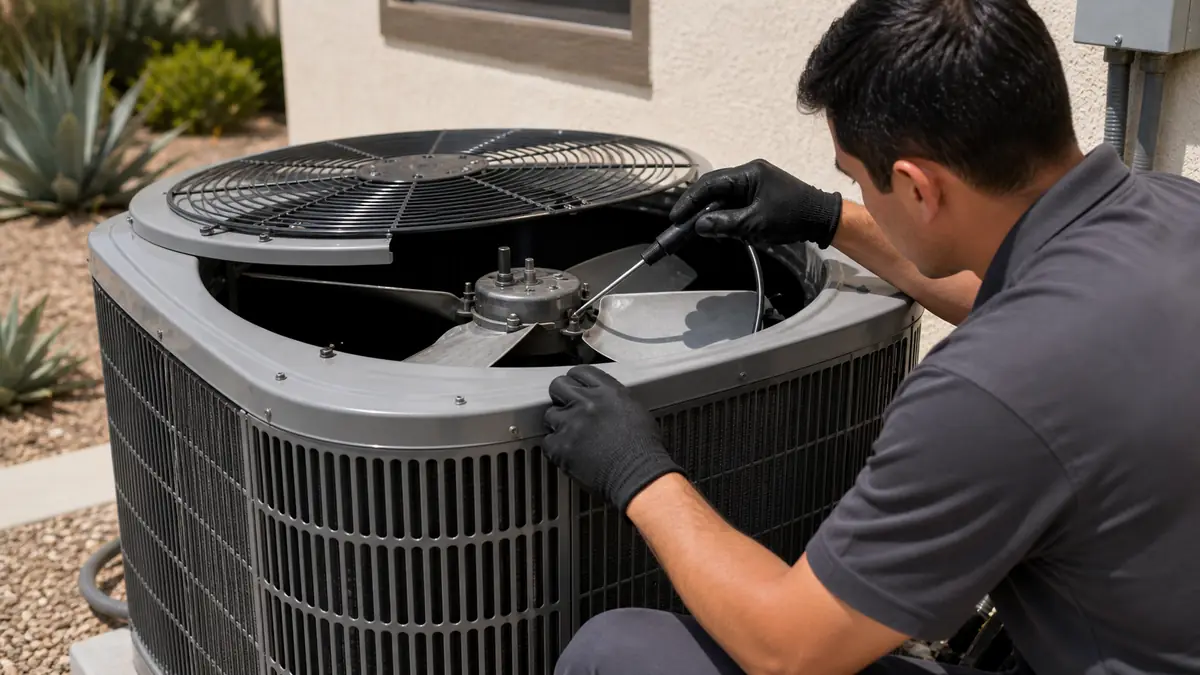
What does each AC noise mean on a Mitsubishi system?
Different sounds come from different parts, and the noise is your best early clue to urgency and cost. A buzz is electrical; a rattle is mechanical and often cheap; a hiss can be refrigerant and worth catching early; a screech or grind is a bearing and should stop you from running the unit. The table maps the sound to the likely cause and a 2026 SoCal lane.
| Sound | Likely cause / first check | Cost lane |
|---|---|---|
| Loud electrical buzz, fan/compressor stalled | Failed capacitor or pitted contactor | $150-$450 |
| Rattle or vibration at the condenser | Loose hardware, debris in fan, worn bearing | $0-$2,300 by cause |
| Persistent hiss or bubbling, weak cooling | Refrigerant leak at flare joint (P8/U7) | $225-$1,500 |
| Metallic screech or grind on start/run | Failing fan-motor or compressor bearing | $450-$3,500 |
Which noises are urgent and which can wait?
Treat a buzz with a stalled fan, a screech, or a grind as urgent - shut the unit off so it does not cook the compressor or chew a bearing. A soft, intermittent gurgle right after a cycle is usually just refrigerant settling and can wait for your next service. A rattle is in between: cut power, clear any visible leaves or twigs from the fan, and if it returns, have the mounting and fan motor checked.
How do you track a Mitsubishi noise to its source, step by step?
Sound diagnosis is part listening, part instrument. We first place the noise: indoor head, outdoor condenser, or the line set between them, and note when it happens - on startup, during steady run, or on shutdown. A buzz timed to a failed start tells us to meter the run/start capacitor (a weak cap reads well below its rated microfarads) and inspect the contactor for pitted or welded points. A rattle sends us to the fan shroud and mounting hardware first, then to the fan-motor bearings, which we spin by hand with the power off to feel for grind or play.
A hiss or persistent bubbling with weak cooling moves the diagnosis to the refrigerant circuit: we read the controller for a P8 abnormal pipe temperature or U7 low discharge superheat, then gauge the charge and check the flare joints with an electronic leak detector. A metallic screech or grind on a compressor or fan motor is a bearing on its way out - we confirm the source and stop the unit, because running it finishes the part. Each sound has a measurable signature, so we never replace a part on a guess.
What is safe to check yourself before you call?
With the disconnect pulled or the breaker off, you can safely clear visible leaves, seed pods, and grit from the outdoor fan shroud - the most common rattle source on a Verdugo foothill unit - and confirm the unit is sitting level on its pad, since a tilted pad amplifies vibration. That is the safe limit. Do not open the electrical compartment to test a capacitor: a charged run capacitor holds a dangerous voltage even with the power off and must be discharged with proper tools. Any buzz with a stalled fan, any screech, any grind, or any hiss with lost cooling is a stop-and-call moment - running the unit in those states risks the compressor or a bearing.
Why do Glendale's foothills add to the noise calls?
Condensers tucked into Verdugo Woodlands, Glenoaks Canyon, and El Miradero sit closer to slopes and landscaping, so Santa Ana wind events blow leaves, seed pods, and grit into the fan shroud - a frequent source of rattles and clipped-blade clatter. Hillside units also work harder in the evening heat pockets, which wears fan and compressor bearings faster than on a shaded flatland lot.
Common questions
My Mitsubishi outdoor unit is buzzing but the fan won't spin - what is that?
A loud electrical buzz with a stalled fan or compressor usually means a failed run/start capacitor or a pitted contactor. The unit is trying to start and cannot. Shut it off so it does not overheat trying, and call - running it in that state stresses the compressor. A capacitor or contactor lands in the $150-$450 lane.
Is a gurgling or hissing mini-split something to worry about in Glendale?
Soft gurgling is often normal refrigerant flow, especially right after the system cycles. A persistent hiss or bubbling, paired with weak cooling, can signal a refrigerant leak at a flare joint, which Mitsubishi may flag as P8 or U7. If cooling has dropped off with the sound, get it checked before the coil freezes.
What makes a Mitsubishi condenser rattle or vibrate in Glendale?
Rattling is usually mechanical: loose mounting hardware, a fan blade clipping debris (common after Santa Ana winds blow leaves into a Verdugo foothill unit), or worn fan-motor bearings. Clear visible debris with the power off; if it persists, the fan motor or blade may need replacement.
Should I keep running a Mitsubishi AC that screeches or grinds?
No. A metallic screech or grind points at a failing fan-motor or compressor bearing, and continued running accelerates the damage. Turn it off and book a diagnosis. Catching a $450-$2,300 fan motor early beats running it into a $1,200-$3,500 compressor failure.
Related: weak airflow, AC repair, and emergency service if a noise comes with a shutdown.