Weak Airflow on a Glendale Mitsubishi System
Bottom line first: Weak airflow on a Glendale Mitsubishi system usually traces to a clogged filter, fouled blower wheel, dirty coil, or, on ducted homes, leaky undersized ducts, so Glendale Mitsubishi HVAC, serving Rossmoyne and Downtown Glendale (ZIP 91205), says start with the filter, then call (213) 755-3565 or book online for a diagnosis before the starved coil freezes over. Weak air is often a freeze warning.
Good to know
- Common causes: clogged filter, dirty blower wheel/coil, failing ECM fan motor, duct leakage, freeze throttling (P6).
- Weak airflow is often the first stage of a frozen coil - act before ice forms.
- Cleaning fix $150-$400; ECM indoor fan motor $450-$2,300.
- Service area: Glendale plus Rossmoyne, Downtown Glendale, Verdugo Woodlands, El Miradero (91201-91208).
- Older retrofit homes often have undersized returns and leaky duct runs.
- Ductless filters lift out for cleaning - check them first each spring.
- Independent; in-warranty units referred to authorized service first.
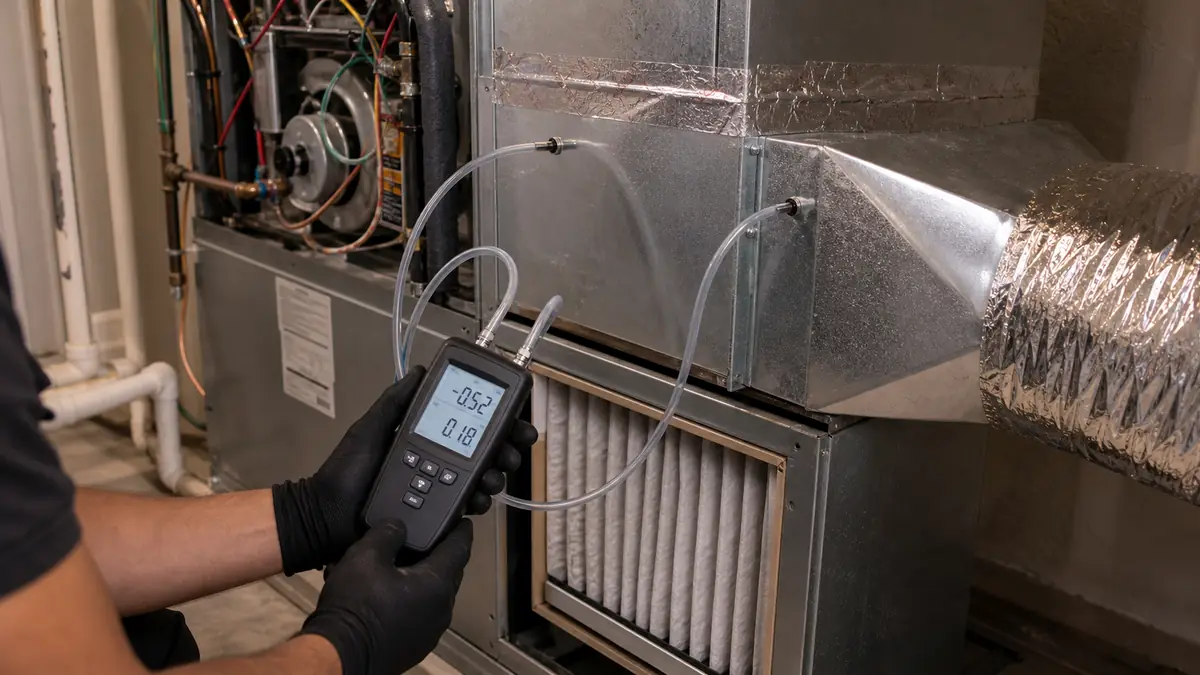
What is choking the airflow on a Glendale Mitsubishi system?
Airflow problems run from a two-minute filter swap to a real motor failure, and naming the cause keeps you from overpaying. On a ductless head the air passes through a filter, the blower wheel, and the indoor coil - any of the three fouling cuts output. On a ducted SVZ/MVZ air handler, add the ECM blower and the duct system itself. The table sorts the cause by where it sits and what it runs in 2026.
| What you notice | Likely cause / first check | Cost lane |
|---|---|---|
| Air weak across all modes, visible dust on filter | Clogged filter or fouled blower wheel | $150-$400 |
| Weak air plus musty smell or water | Dirty coil or condensate clog (P4/P5) | $150-$600 |
| Ducted vents weak only at far rooms | Duct leakage or undersized returns | Varies; duct repair $1,900+ |
| Blower slow or surging, no airflow at times | Failing ECM indoor fan motor | $450-$2,300 |
How is weak airflow connected to a frozen coil?
They are the same fault at different stages. Restricted airflow lets the indoor coil run too cold; the coil dips below freezing, condensation ices, and the ice then blocks even more air - a spiral that ends in a P6 freeze trip or a dead-iced head. If your airflow has gone weak and the refrigerant line feels frosty, switch the system off and let it thaw before you call. See our frozen coil page for the thaw steps.
How does a tech diagnose weak airflow, step by step?
Weak airflow gets diagnosed from the air path inward, cheapest cause first. We read the controller or kumo cloud for a P6 freeze trip or a P4/P5 condensate code that can throttle output, then pull the filter and inspect the blower wheel - a wheel caked with Glendale dust and pollen loses a surprising fraction of its airflow and is the single most common find. Next we check the indoor coil face for fouling, since a dirty coil chokes air and drops the temperature split.
If the filter, wheel, and coil are clean, the diagnosis moves to the blower itself and the ducts. On a ducted SVZ/MVZ air handler we check the ECM motor for a slow or surging spin and read its commanded speed; a failing ECM module produces exactly that erratic behavior. For ducted homes with weak air only at the far rooms, we measure static pressure and look for duct leakage or undersized returns rather than condemning a healthy motor. The readings, not a hunch, decide whether you owe a $200 cleaning or a motor.
What can you check before calling about weak air?
The safe homeowner checks are quick: pull the ductless filter and wash or replace it - in Glendale's pollen season this alone restores airflow more often than any other fix - and confirm supply vents and returns are open and not blocked by furniture or rugs. Check that the indoor head's vanes are set to a normal angle, not pinned shut. Those cover the no-tool causes. Leave the blower wheel, the coil, and the ECM motor to a tech: cleaning a wheel means partial disassembly, and a failing ECM needs metering to confirm. If a clean filter does not restore airflow, or the line set feels frosty, call before the starved coil freezes.
Why do older Glendale homes fight weak airflow?
Glendale's pre-war flatland - dense 1910s-1930s homes near Downtown and the Galleria - was rarely built for ducts, so retrofit ductwork gets crammed into shallow attics and crawlspaces with undersized returns and leaky joints. Even a strong blower cannot push enough air through bad duct geometry. In those homes, a ductless wall or ceiling head often delivers more usable air than chasing leaks through a compromised duct run.
Common questions
Why is my Mitsubishi mini-split barely blowing air in Glendale?
On a ductless head the usual culprit is a clogged filter or a fouled blower wheel - Glendale dust and pollen pack them within a season. Beyond that, a dirty indoor coil, a failing indoor fan motor, or a system throttling itself on a P6 freeze-protection trip all cut airflow. We check the simple causes first before condemning a motor.
Can weak airflow mean my coil is about to freeze?
Yes - weak airflow and a frozen coil are two stages of the same problem. When too little air crosses the indoor coil, the coil temperature drops below freezing and ice builds, which then chokes airflow further. If your air is weak and the line set feels frosty, shut it off and call before it ices solid.
How much does fixing weak airflow cost in Glendale?
A cleaning - filter, blower wheel, coil - typically runs $150-$400. A failed indoor ECM fan motor on a ducted air handler is the expensive end at $450-$2,300. Duct leakage or undersized returns in an older home are a separate fix. We diagnose which it is rather than guessing.
Is weak airflow worse in older Glendale homes?
Often. Many 1920s Spanish and Craftsman homes retrofitted with ductwork have undersized returns and long, leaky duct runs squeezed into tight chases, so even a healthy blower delivers weak air at the far vents. That is one reason we often recommend ductless heads over fighting bad duct geometry.
Related: frozen evaporator coil, AC making noise, and maintenance plans that keep filters and coils clear.