HVAC Sizing and Manual J for Glendale, CA Homes
Bottom line first: Size a Glendale Mitsubishi system off a Manual J load calculation, not the "1 ton per 400-600 sq ft" rule, because Climate Zone 9 heat, west-facing glass, attic R-value, and air leakage set the real load; Glendale Mitsubishi HVAC runs that math from Rossmoyne to El Miradero (ZIP 91207), so call (213) 755-3565 or book online for a right-sized system.
Good to know
- Manual J is the load calculation the industry treats as standard; Manual S then pairs the equipment and Manual D sizes the ducts.
- Oversize the system and short-cycling follows - cold-clammy swings, rooms left out of balance, and added wear.
- A square-footage rule of thumb ignores orientation, glazing, insulation, and air leakage.
- Glendale is cooling-dominant Title-24 Climate Zone 9, running 35-50 days a year above 90 F.
- A Mitsubishi inverter absorbs load swings far better than single-stage gear.
- Swap a split system in Zone 9 and charge-plus-airflow (HERS) verification generally applies.
- Multi-zone sizing works room-by-room, then reconciles to a diversified combined load.
- Install ranges in this guide: single-zone $3,500-$8,000; multi-zone $9,000-$20,000; ducted heat pump $6,000-$16,000.
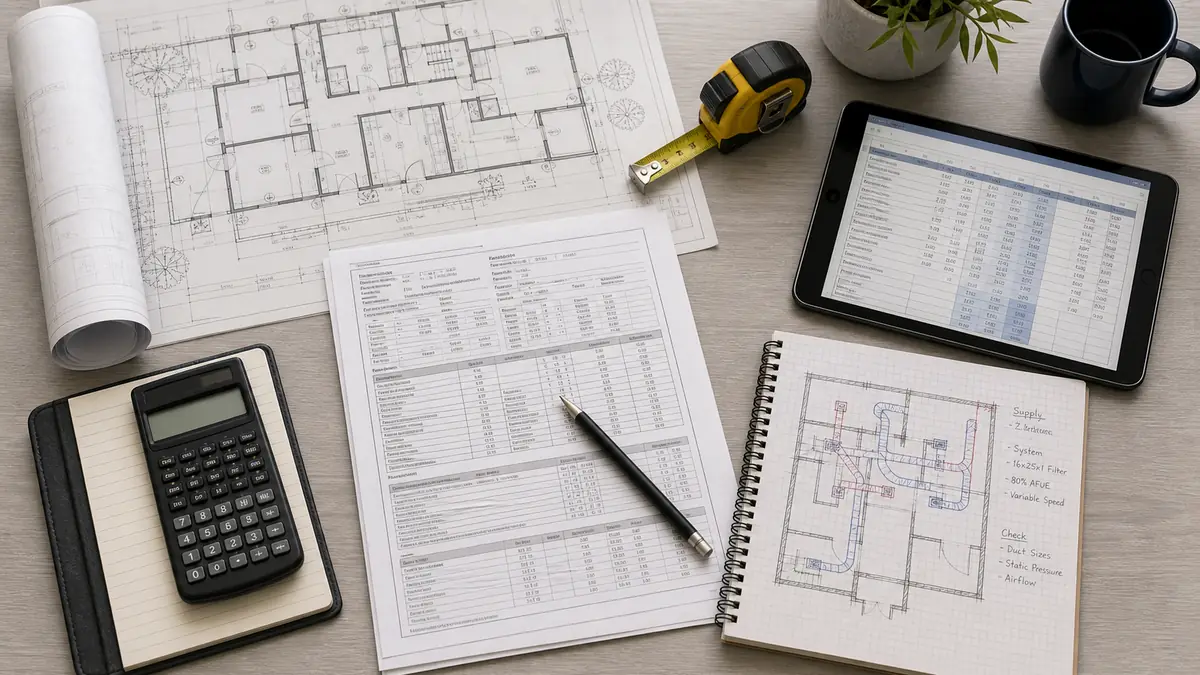
What is Manual J and why does Glendale need it?
Manual J is the ACCA-standard residential load calculation - the room-by-room math that adds up heat gain through walls, windows, the roof, and infiltration, plus the heat shed by people and appliances, arriving at the real BTU load your home has to offset. It answers "how big should this thing be" directly, and in Glendale that answer matters more than in most towns, because the housing and the microclimate shift so dramatically inside a few miles. A 1,400 square foot Craftsman near Brand Library, a mid-century ranch up in Verdugo Woodlands, and a sun-baked hillside home in El Miradero can each need different equipment despite nearly matching square footage.
That shortcut so many installers still rely on - one ton of cooling per 400 to 600 square feet - is exactly what keeps Glendale homes oversized. It ignores how much glass faces west into the late-day Verdugo heat, whether the attic is stuffed with insulation or empty, and how badly the envelope bleeds air. Manual J swaps that guesswork for the inputs that truly move the number.
Why does oversizing fail in Glendale's climate?
In theory a larger system ought to cool better. In practice the oversized unit races past the setpoint and clicks off - short-cycling - before it has pulled humidity from the air or evened the temperature room to room. You wind up cold and clammy near the thermostat yet warm in the back bedroom, while the compressor wears down from the relentless stop-start. Across Glendale's long cooling season, with the system running daily from late spring into fall, all those cut-short cycles add up to premature failures and uneven comfort.
The table below shows the trade-offs of getting sizing wrong in either direction. Both extremes cost comfort and money; the goal is a system that runs long, steady cycles matched to the real load.
| Sizing outcome | What happens | Consequence |
|---|---|---|
| Oversized (too big) | Short-cycles, shuts off before dehumidifying | Clammy, uneven rooms, compressor wear |
| Undersized (too small) | Runs nonstop, cannot hold setpoint in heat | Never cools enough on 95 F days, high bills |
| Right-sized (Manual J) | Long steady cycles near design conditions | Even comfort, dehumidification, longer life |
What inputs change the load on a Glendale house?
A handful of factors push the Manual J result around, and Glendale's housing stock trips most of them. Single-pane windows in a 1920s Spanish or Tudor pour in solar gain; west and south glass facing the Verdugo slopes piles on load through the afternoon; a thin, under-insulated attic over a minimal-traditional flat lets heat soak through; and an envelope that has stood for decades leaks air. The table sums up the main levers and which way each one pulls.
| Factor | Typical Glendale situation | Effect on cooling load |
|---|---|---|
| Window orientation | West/south glass toward Verdugo sun | Raises afternoon load sharply |
| Glazing | Single-pane in pre-war homes | Raises load; dual-pane lowers it |
| Attic insulation | Shallow or missing in older stock | Raises load; deep insulation lowers it |
| Air leakage | Leaky 1920s-1940s envelopes | Raises load; sealing lowers it |
| Microclimate | El Miradero / canyon heat pockets | Raises evening load vs. flatland |
How do Mitsubishi inverter systems change the sizing math?
Older single-stage gear runs at one locked capacity, leaving an oversized unit no option but to short-cycle. Mitsubishi's inverter-driven M-Series and P-Series systems vary compressor speed instead, easing down on a mild morning and pushing up on a 94 F afternoon, which builds in real tolerance for the load shifting through the day. None of that excuses oversizing - a wildly large head still cools poorly at low load - but a well-sized inverter system rides Glendale's broad daily swing far more comfortably than any fixed-capacity AC could.
For ductless and multi-zone work the discipline shifts to per-room sizing. We calculate each zone, choose head capacities that match (a bigger head for the hot west room, a smaller one for the shaded study), then select the MXZ or MXZ-SM outdoor unit for the combined, diversified load - because not every room peaks at once. Over-heading a small outdoor unit is the ductless version of oversizing and produces the same poor low-load behavior.
Worked example: sizing a 1,500 sq ft Rossmoyne Spanish home
Numbers make this concrete. Take a 1,500 square foot 1926 Spanish Colonial in Rossmoyne (ZIP 91207): single-pane wood windows, roughly 180 square feet of west and south glass facing the afternoon Verdugo sun, an attic with maybe R-13 left in it, and a leaky 1920s envelope. The square-footage shortcut at 1 ton per 500 sq ft says 3 tons (36,000 BTU). A real Manual J tells a different story, and oversizing by even a half-ton sends this house into short-cycling.
| Load component | Approx. contribution | Why it matters here |
|---|---|---|
| Walls + roof conduction | ~9,000-11,000 BTU/h | Thin attic insulation drives roof gain up |
| West/south single-pane glass | ~7,000-9,000 BTU/h | Biggest single lever; afternoon solar gain |
| Infiltration (air leakage) | ~4,000-6,000 BTU/h | Leaky 1920s envelope; sealing cuts this |
| People + appliances + lights | ~3,000-4,000 BTU/h | Internal gains, roughly fixed |
| Manual J total | ~24,000-30,000 BTU/h | About 2 to 2.5 tons, not 3 |
Seal that envelope and add deep attic insulation first and the same house can drop toward 22,000 BTU/h, which is why we run the calculation against the home you will live in, not the one you have today. Spend the money on the envelope and you buy a smaller, cheaper, longer-lived system - a one-ton-smaller condenser at this size saves real money up front and runs steadier all summer.
What does the oversizing failure chain actually look like?
Oversizing does not fail all at once; it fails in a chain, and naming the links shows why the half-ton "just to be safe" backfires. Each stage feeds the next, and the homeowner usually only notices it three or four links in - by which point the compressor has already taken the wear.
| Stage | What happens |
|---|---|
| 1. Fast satisfy | Big unit hits the setpoint in 3-5 minutes |
| 2. Short-cycle | Compressor shuts off before a full dehumidification cycle |
| 3. No moisture removal | Air feels cold but clammy; rooms swing 3-4 F |
| 4. Hot/cold imbalance | Back bedrooms never settle; thermostat room overshoots |
| 5. Mechanical wear | Stop-start cycling wears the compressor and contactor early |
A Mitsubishi inverter breaks this chain at stage one because it can ramp down instead of slamming off, but the chain still bites a wildly oversized inverter head at low load. Right-sizing is the only fix that holds across every system type.
Worked example: zoning a hillside Glenoaks Canyon home
Multi-zone sizing is per-room, then reconciled. Picture a 2,200 square foot hillside home in Glenoaks Canyon with a hot west-facing primary bedroom, two shaded north bedrooms, and an open great room. We run a load on each: the west bedroom might want a 12,000 BTU MSZ-FS head, each north bedroom an 9,000 BTU head, and the great room an 18,000 BTU head. That stacks to 48,000 BTU of nameplate head capacity.
You do not buy a 48,000 BTU outdoor unit, though, because those rooms do not all peak at the same moment - the west room peaks at 5 pm, the great room mid-day. We apply a diversity factor and select an MXZ-SM42NAMHZ SMART MULTI condenser (42,000 BTU, Hyper-Heat) sized to the realistic simultaneous load. Over-heading - hanging 48,000 BTU of heads on a small 36,000 BTU outdoor unit - is the ductless version of oversizing and produces the same weak low-load behavior in shoulder season.
What does Title-24 require when you replace a system in Glendale?
California's Title-24, Part 6 energy code layers on top of the federal equipment minimums and regulates new and altered HVAC zone by zone. Glendale sits in cooling-dominant Climate Zone 9, where replacing a split system usually triggers refrigerant-charge and airflow verification, and reworking the ducts often calls for duct-sealing with HERS field verification handled by an independent rater. A sound Manual J feeds straight into that compliance and shields you from an installer who would sooner drop in an oversized unit than run the math. Always verify the exact verification triggers and the current code cycle for your address and equipment class before the work starts.
Bottom line: how to get sizing right in Glendale
The short checklist: insist on a written Manual J load calculation before anyone quotes equipment, address the envelope (attic insulation, air sealing, west-glass shading) before you size, lean on a Mitsubishi inverter's variable-speed band for daily load swings rather than as an excuse to oversize, and size multi-zone systems room-by-room reconciled to a diversified outdoor unit. Confirm your Title-24 charge, airflow, and HERS triggers for your address. Do those five things and you land a system that runs long, quiet cycles for 15-plus years instead of one that hammers itself short-cycling through every Glendale summer.
Common questions
Why is a bigger AC worse for my Glendale home?
Oversize it and the unit floods the room with cold air, reaches the thermostat target inside a couple of minutes, and shuts down before it has wrung out humidity or evened the temperature room to room - that is short-cycling. What Glendale homeowners feel is cold-then-clammy swings, a compressor chewed up by constant stop-start, and rooms that never settle in. Size it right and the unit runs longer at a softer output and holds comfort more evenly.
Can I size a system by square footage alone in Glendale?
No, you can't. The 'one ton per 400-600 square feet' rule of thumb sails right past what genuinely drives the load in Glendale - a west-facing El Miradero wall baking all afternoon, single-pane glass in a 1920s Spanish house, how thick the attic insulation actually is, and how much air the place loses. Two same-size homes one block apart can need different equipment, and only a Manual J load calculation accounts for all of it.
Do Mitsubishi inverter systems change how sizing works?
They do, and in your favor. A single-stage AC only knows full-blast or off, which makes oversizing brutal. A Mitsubishi inverter throttles its output up and down, so it handles a shifting load better and eases off on a mild day. You still cannot go wildly oversized, but that variable-speed band leaves far more room for error than the old fixed-capacity gear ever did.
Is a load calculation required for a permit in Glendale?
California's Title-24 energy code expects the equipment to be sized against a calculated load, and in Climate Zone 9 swapping in a replacement split system typically brings refrigerant-charge and airflow verification, often with HERS field testing layered on. A genuine Manual J keeps you clean at inspection and away from an oversized install - just verify the exact triggers that apply to your address and equipment class.
How do you size a multi-zone Mitsubishi system in Glendale?
One room at a time. We work out the load for each zone - that hot west bedroom may want a bigger head than a shaded north room - and then pick the outdoor unit against the combined, diversified load instead of just stacking up nameplate tons. Hang too much head capacity on a small outdoor unit and you get the same weak low-load behavior that oversizing a central system causes.
Related: SEER2 minimums and California rebates, multi-zone systems, Hyper-Heat heat pumps, and AC repair in Glendale.